


Key findings
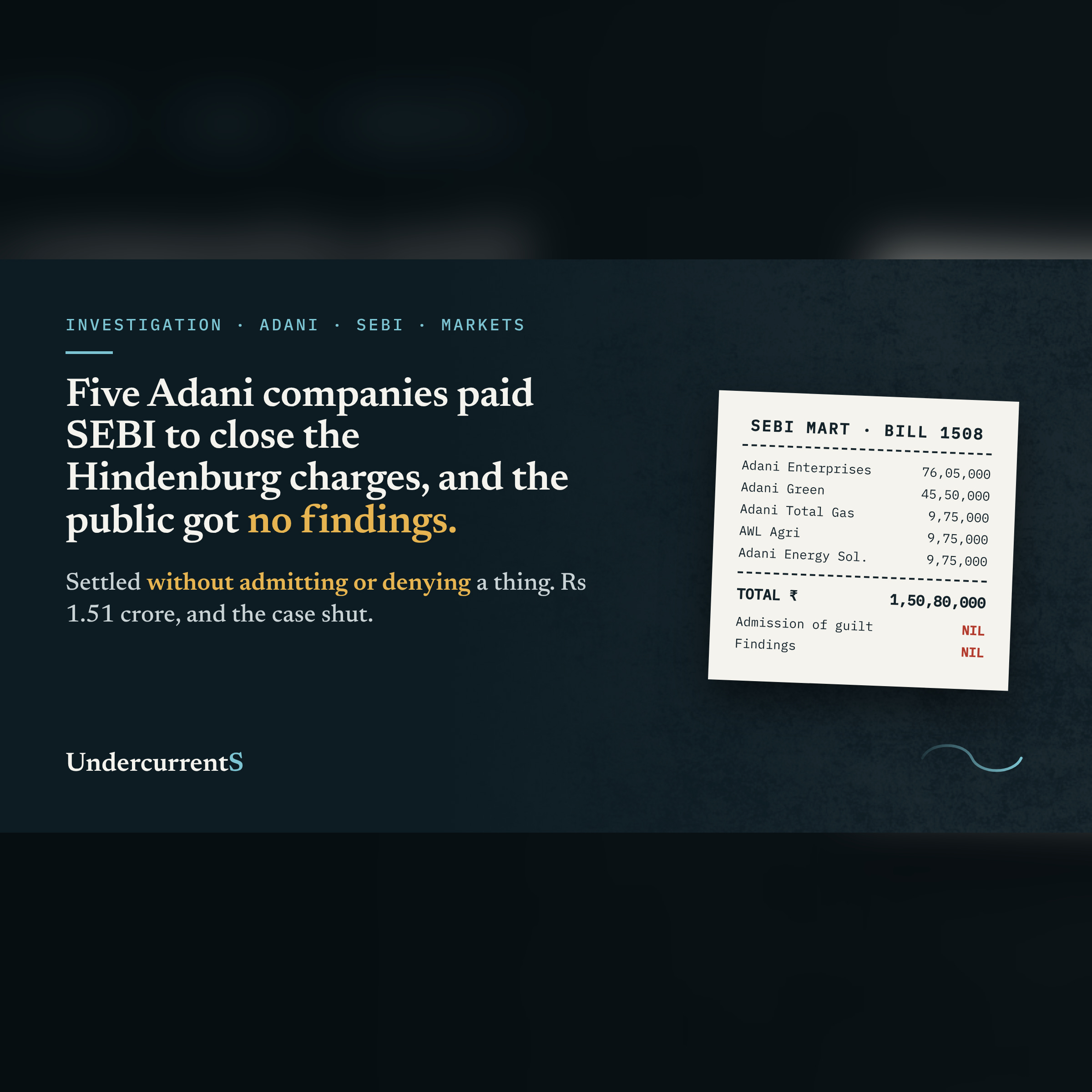
Five Adani companies paid Rs 1,50,80,000 to settle SEBI charges that grew out of the Hindenburg report.
They settled “without admitting or denying” the facts, so nobody ruled on whether the charges were true.
The same officer settled a case against Adani Ports chief executive Karan Adani twelve days earlier.
Both files cleared SEBI’s committees on the same two days, 29 June and 13 August 2026.
At 3.58 pm on 22 September 2026, Jai Sebastian, an adjudicating officer at the Securities and Exchange Board of India, digitally signed a five-page order. It closed a case against five Adani companies.
Adani Enterprises paid Rs 76,05,000 and Adani Green Energy Rs 45,50,000. Adani Total Gas, AWL Agri Business and Adani Energy Solutions paid Rs 9,75,000 each. The bill came to Rs 1,50,80,000.
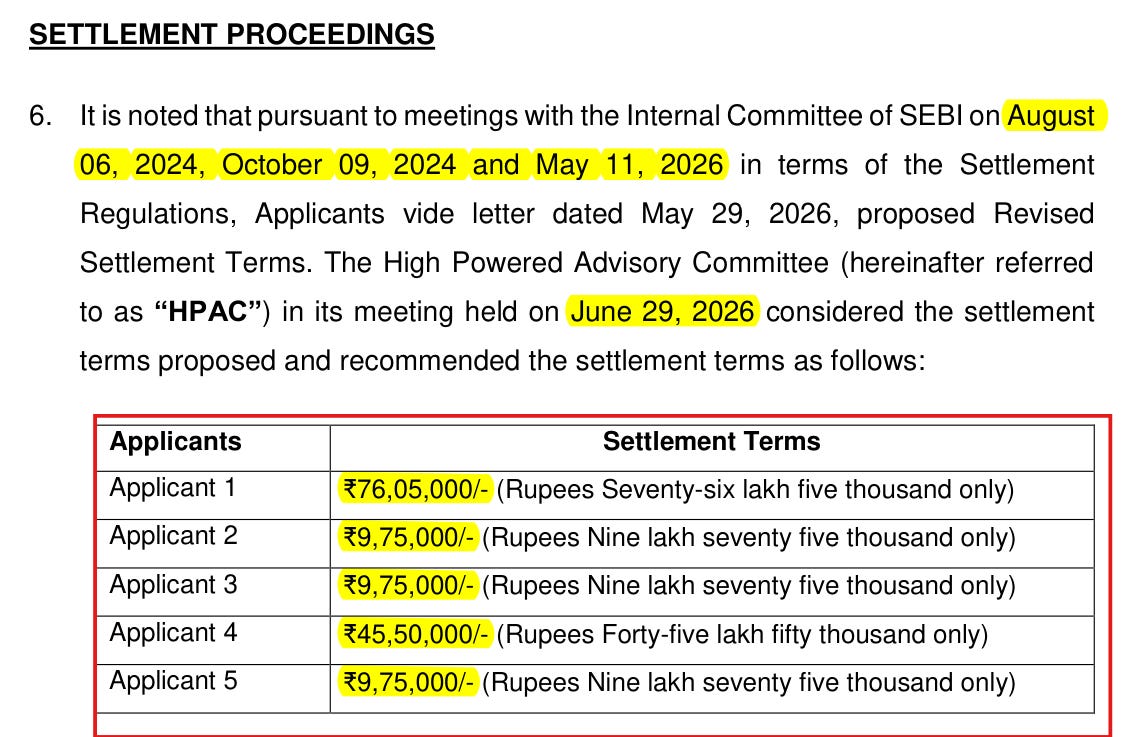
What each company paid. Source: SEBI settlement order, 22 September 2026, page 4.
The charges came out of a report the group had called false. When the US short seller Hindenburg Research published it on 24 January 2023, the Adani Group answered with 413 pages. The report, it said, was “nothing but a lie” and “a calculated attack on India, the independence, integrity and quality of Indian institutions”.
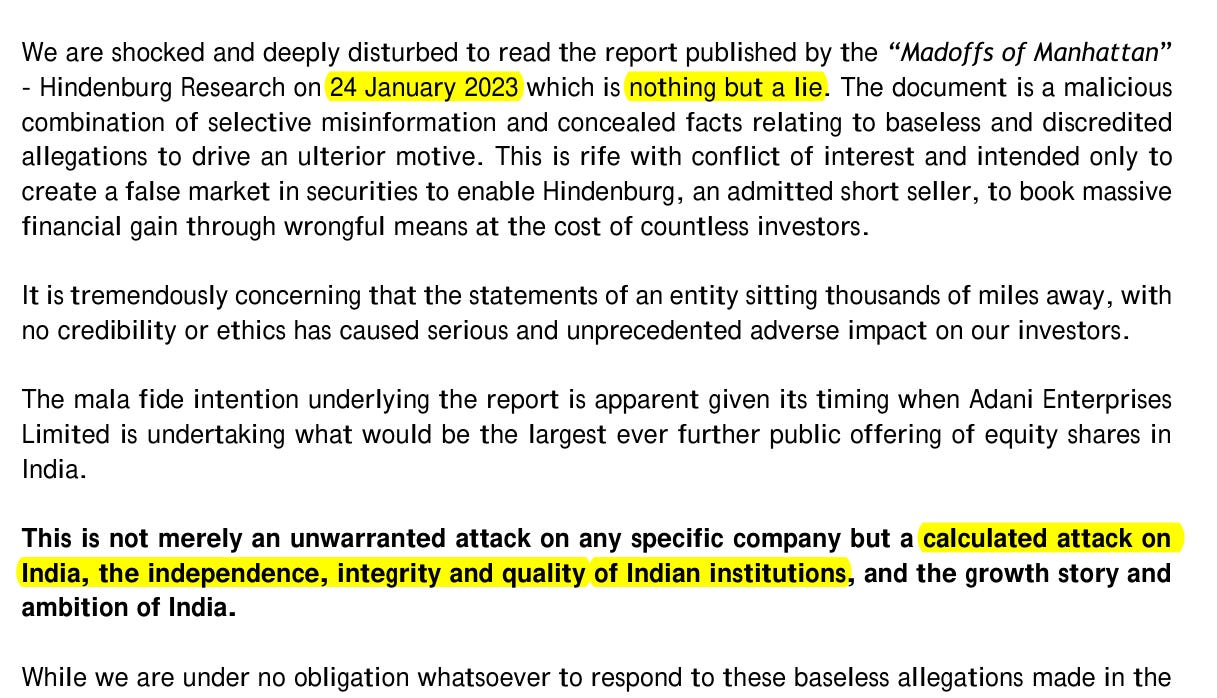
The group’s reply to Hindenburg, January 2023. Source: Adani Response filed with the National Stock Exchange, printed page 3.
But when SEBI put those allegations to the companies, they did not fight them. They paid to close the case “without admitting or denying the findings of facts and conclusions of law”.
This was no ordinary defendant. A 2023 OCCRP investigation described “the group’s widely perceived closeness to Prime Minister Narendra Modi”. By late May 2026 the group had added around Rs 5 lakh crore in market value that year, IANS reported. At that pace, the settlement cost it about 38 seconds of the year’s gains.
What SEBI said was wrong
The charges went to whether investors could trust the group’s books. SEBI alleged that Adani Enterprises kept out of its 2012-13 annual report the deals between its subsidiary Adani Estates and Vakoder Investment. Vakoder was a related party, a company tied to the people who control the group.
The second charge was about the auditors. Between 2015 and 2021, group companies filed reports signed by audit firms that held no valid peer-review certificate. That certificate shows the accountants’ own institute has checked an auditor’s work. SEBI’s rules require it.
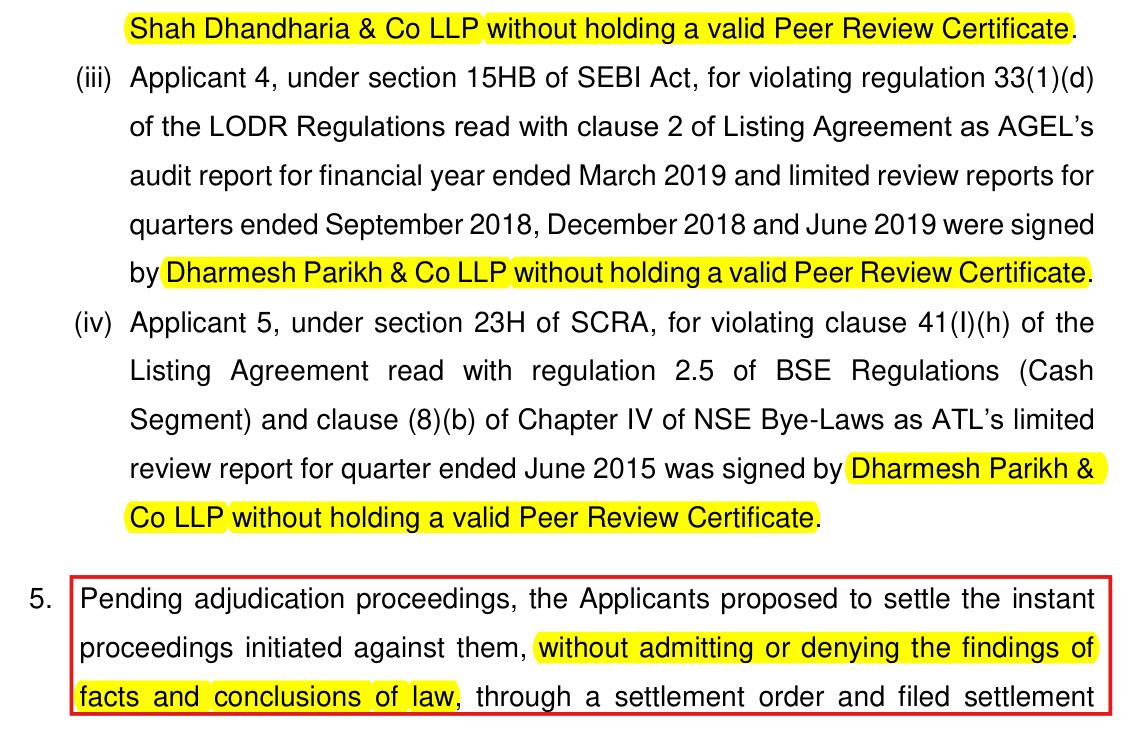
The charges, and the choice to settle without admitting or denying them. Source: SEBI settlement order, 22 September 2026, page 3.
SEBI had examined Hindenburg’s allegations at seven Adani companies. On 15 February 2024 it sent five of them a show-cause notice. They applied to settle that year. Talks with SEBI’s internal committee ran through August and October 2024 and resumed in May 2026. On 29 May the companies offered revised terms.
Then the file moved. SEBI’s high-powered advisory committee recommended the amounts on 29 June. A panel of whole-time members accepted them on 13 August. On 5 September the companies emailed to say they had paid.
The same officer, the same dates
Those three dates appear in a second Adani file. On 10 September Sebastian settled a case against Karan Adani, Gautam Adani’s son and chief executive of Adani Ports, and B Ravi, its finance chief.
SEBI had alleged that the two men broke the rule on the compliance certificate a chief executive and finance chief give their board. The case concerned bank transactions and deposits between Adani Ports and a company called PMC Projects, under a notice of 22 November 2023. That order does not mention Hindenburg.
Each man paid Rs 13,65,000. Their file reached the advisory committee on 29 June and the panel on 13 August, and their payment was reported by email on 5 September. One officer signed both orders.
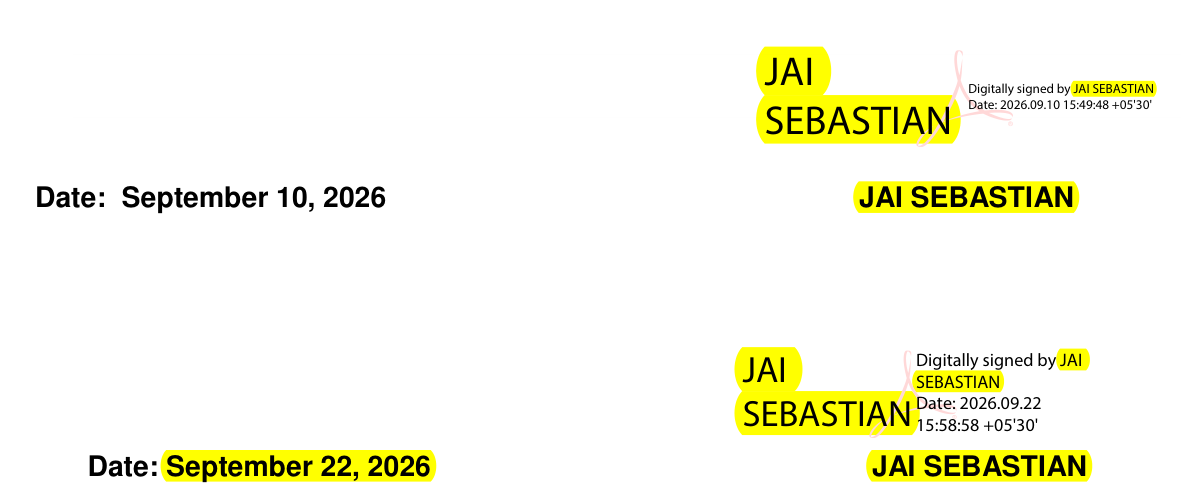
Jai Sebastian’s signature on both orders, twelve days apart. Source: SEBI settlement orders of 10 September 2026 (page 4) and 22 September 2026 (page 5).
Six days after the five companies settled, SEBI closed a third Adani case, on public shareholding, the same way.
“Truth has prevailed”
The group has welcomed SEBI’s word when it went its way. In September 2025 SEBI whole-time member Kamlesh Chandra Varshney ruled on Hindenburg’s claim that money was routed through two firms, Milestone Tradelinks and Rehvar Infrastructure. He found the allegations “not established”.
Gautam Adani wrote to shareholders six days later. The Hindenburg report, he said, “was a direct challenge to the audacity of Indian enterprises to dream on a global scale”. “With SEBI’s clear and final word, truth has prevailed.”
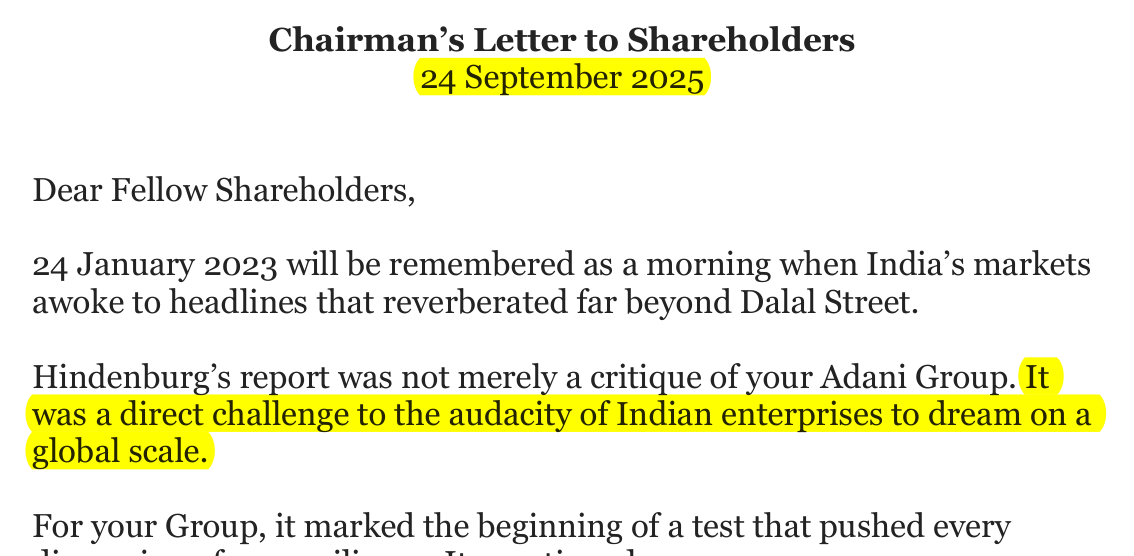
Gautam Adani’s letter to shareholders. Source: Adani Enterprises filing, 24 September 2025, page 2.
Varshney’s order weighed the facts and applied the law. Sebastian had been appointed “to inquire into and adjudge” the 2024 charges. His order did neither.
Settling is lawful, and SEBI does it often. In 2025-26 it disposed of 170 settlement applications and collected Rs 109.82 crore. It also turned 199 away that year, rejected, returned or withdrawn. Its rules let it refuse to settle a default that “affected the integrity of the market”.
The group itself had cast the allegations as an attack on the “integrity and quality of Indian institutions”. SEBI settled anyway.
What the order leaves out
The order names the two audit firms, Dharmesh Parikh & Co LLP and Shah Dhandharia & Co LLP. It does not say whether SEBI has acted against either. Nor does it say what the Vakoder deals were worth, or whether the 2012-13 accounts were ever corrected. It does not explain how group companies kept filing reports from uncertified auditors from 2015 to 2021. SEBI can still restore the case if anything the companies told it proves untrue.
Everyone who settles signs an undertaking in a form the rules prescribe. It waives any appeal. It bars the signer from publicly denying SEBI’s findings once the order is passed. And for disclosure defaults it carries the line “I/we do not deny the alleged default.”
The companies that called the charges “nothing but a lie” would have signed that form. SEBI has not published what they signed.
The documents this story is based on, the clearances, orders, agendas and filings, are collected in one place.
→ The documents behind this story — add your DocumentCloud link